Quick Answer
Recruitment agencies use digital business cards to instantly share their contact details and capture candidate or client information during networking, interviews, or industry events. By replacing paper cards with digital profiles, often accessed via QR codes or NFC-enabled cards, agencies streamline the process of exchanging and recording contact data, making follow-up more reliable and efficient. This shift is supported by the growing comfort with contactless technology, as an ABI Research study sponsored by the NFC Forum (2024) found that a majority of consumers are now accustomed to tapping phones or cards for quick information exchange.
Key Takeaways
- Digital business cards allow recruiters to share up-to-date profiles and collect candidate or client details in real time.
- Agencies benefit from centralized contact management, reducing the risk of lost or outdated information.
- Digital cards are easier to update than paper cards, supporting frequent team changes and brand rollouts.
- Sharing is as simple as tapping a card or scanning a QR code, no app required for recipients.
- Analytics and CRM integrations help track networking performance and automate follow-up.
- Team controls and branding features support consistent, professional rollout across the agency.
How the concept works in practice
Before Digital Business Cards
Traditionally, recruiters would hand out paper business cards at job fairs, networking events, or client meetings. Candidates and clients might collect dozens of cards, often losing them or entering details manually into their phones or CRMs. Follow-up relied on manual data entry, which was time-consuming and error-prone.
After Digital Business Cards
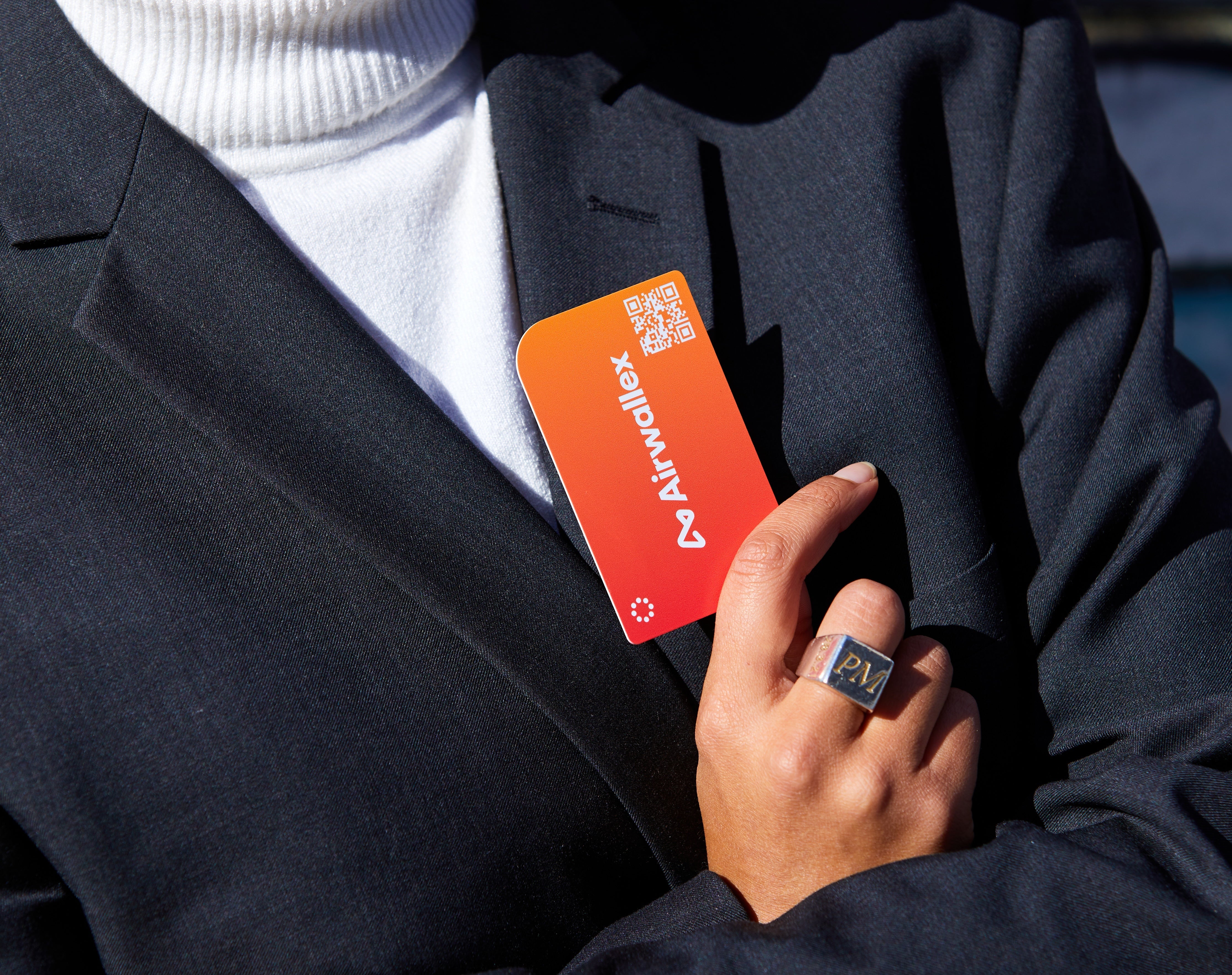
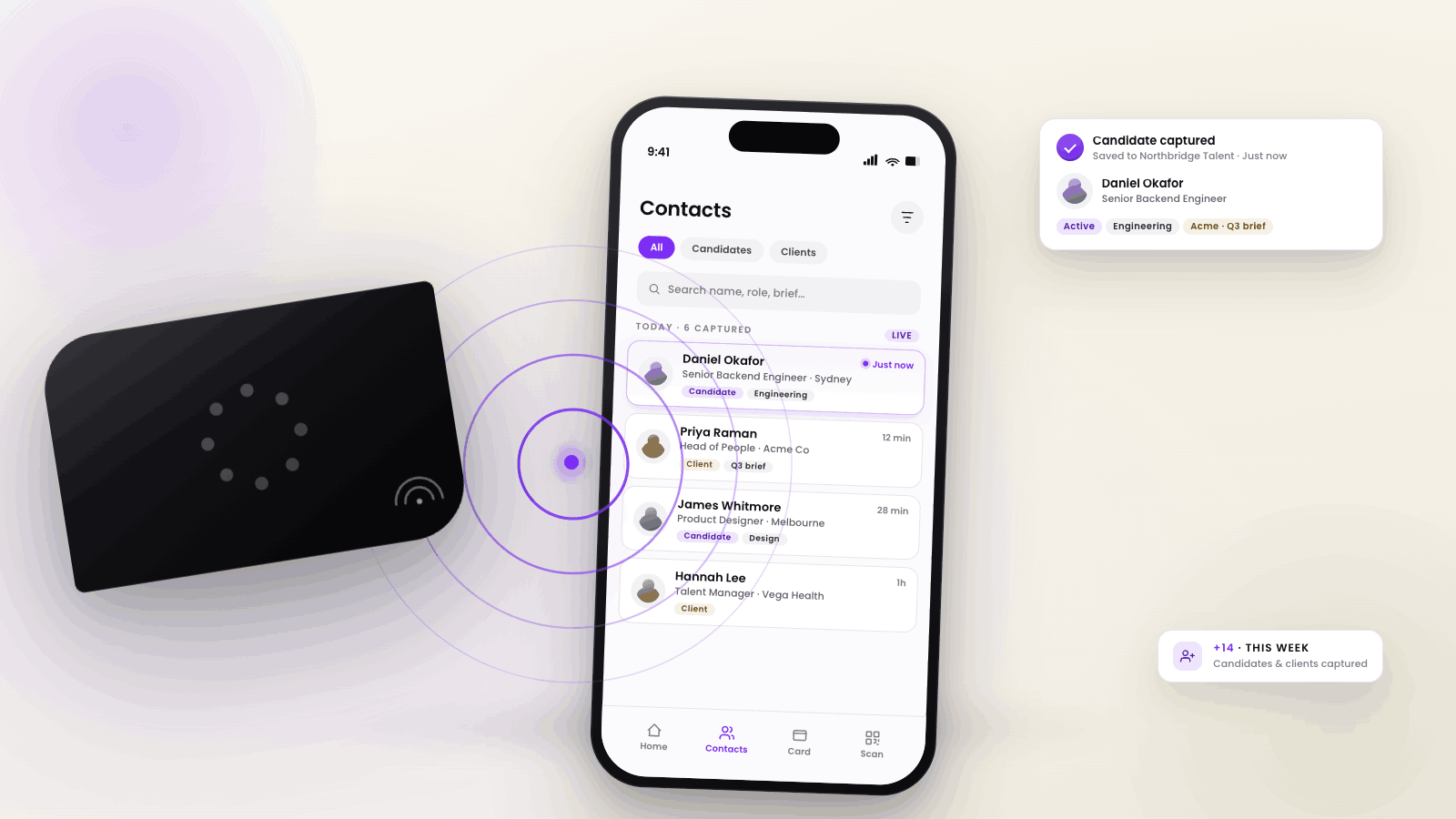
With digital business cards, each recruiter carries a single NFC-enabled card or displays a QR code on their phone or badge. When meeting someone, they offer a quick tap or scan. The recipient receives the recruiter’s contact details instantly and can submit their own information through a simple form, no app required. The agency’s system then stores these new contacts centrally, ready for automated follow-up or CRM sync. For team rollouts, managers can customize profiles, assign cards, and monitor usage from a central dashboard. Brand consistency is maintained, and updates (like role changes or new office addresses) are reflected instantly across all cards. This dynamic updating is possible because QR-linked digital information can be changed without reissuing a physical card, as explored in a peer-reviewed study on QR-based credentials (PubMed Central, 2022).
Example Workflow
- A recruiter at a job fair taps their card to a candidate’s phone.
- The candidate receives a digital profile and fills out a short form with their details.
- The recruiter’s dashboard logs the new contact, and the information can be exported or synced to the agency’s CRM.
- Team managers can view analytics on card usage and follow up as needed.
For more on the differences between NFC and QR code sharing, see NFC Business Cards vs QR Codes: Which Sharing Method Works.
Benefits, tradeoffs, and common objections
Benefits
- Always up to date: Digital cards can be updated instantly, so there is no need to reprint for every promotion or office move. This flexibility is a key advantage over traditional cards, as shown in research on dynamic QR credentials from PubMed Central (2022).
- Centralized management: All contacts are stored in one place, reducing the risk of lost information and supporting better team coordination.
- Streamlined follow-up: Contact details are captured directly and can be integrated with CRM tools, which helps speed up and automate follow-up. The benefits of sales automation for quickly capturing and logging lead details into CRM software are highlighted by Net2Phone (2024).
- Brand consistency: Agencies can control the look and feel of every team member’s card, supporting multi-brand or multi-office operations.
- Sustainability: Reduces paper waste and the need for constant reordering.
For more on the unique advantages of digital cards, see What Smart Business Cards Can Do That Paper Cards Can't.
Tradeoffs
- Adoption curve: Some recipients may be unfamiliar with digital cards, though QR codes and NFC are now widely recognized. According to Bitly’s 2026 QR code statistics, over two-thirds of consumers have used a QR code in the past year, and half of Gen Z and Millennials scan QR codes at least once a week.
- Device compatibility: Very old phones may not support NFC, but QR codes provide a universal fallback.
- Perceived formality: Some traditional clients may still expect a physical card, though digital options are increasingly accepted.
Common Objections
- Will people actually use or scan it? Most modern smartphones can scan QR codes or tap NFC cards without extra apps, and the process is quick and intuitive. An ABI Research study for the NFC Forum (2022) found that 85% of consumers across nine countries had used an NFC contactless card or mobile payment wallet, and 95% had used NFC contactless technology to pay for a product in the last year.
- Is this easier than a normal business card? Yes, recipients don’t need to type details manually, and recruiters don’t need to carry stacks of cards or worry about running out.
- Can it support a team or brand rollout? Yes, digital platforms offer admin controls, group management, and customizable templates for agency-wide consistency.
What to compare before choosing a solution
When evaluating digital business card solutions for your recruitment agency, consider these practical criteria:
- Ease of sharing: Does the card support both NFC and QR code sharing? Is it simple for recipients to access your details without installing an app?
- Contact capture: Can recipients submit their own details, and are these contacts stored centrally for your team?
- Updates and management: How easy is it to update profiles, assign cards, or make changes for team members?
- Analytics: Does the platform provide insights into card usage and engagement?
- CRM integration: Can you export contacts or sync them with your existing CRM?
- Team controls: Are there admin features for managing groups, customizing branding, and assigning permissions?
- Cost-effectiveness: Are there options for single cards, team packs, or branded rollouts? Is replacement straightforward if cards are lost or roles change?
- Simplicity: For solo recruiters or very small teams, a basic digital card may be enough. Larger agencies will benefit from centralized controls and analytics.
For more on how digital cards can enhance client relationships, see Improving Client Relationships with Digital Business Cards.
Where Tapt fits
Tapt offers digital and NFC business card solutions designed for individuals and teams in recruitment. Agencies can create customized profiles for each recruiter, manage groups for different brands or offices, and assign group managers for localized control. The Tapt dashboard provides centralized management of profiles, contact capture, and analytics, making it easy to oversee team rollouts and track engagement. Recruiters can share their details via NFC tap or QR code, and recipients can submit their own information without needing an app. Tapt also supports CRM integrations and offers streamlined reordering if cards are lost or roles change, helping agencies maintain up-to-date, branded networking tools at scale.
Bottom line
Digital business cards give recruitment agencies a faster, more reliable way to share contact details and capture leads. By centralizing contact management and enabling instant updates, agencies can improve follow-up, maintain brand consistency, and support team growth. Whether you’re a solo recruiter or managing a multi-office agency, digital cards offer a practical upgrade over paper, making networking smarter and more sustainable.